

Interview: Madeline Kenney
on showing the scar

Whoever said you shouldn’t meet your heroes has obviously never met Madeline Kenney. I like to remind Madeline that although I’m her friend, I was a fan first, and a fan I shall remain. I remember vividly the first time I saw her perform after a year of listening to Sucker’s Lunch (2020) in the bedroom where I spent the pandemic. She was wearing a black cape with a hood because the show was Halloween themed; that was the year that Outside Lands was rescheduled to October rather than its usual late summer date. I stuck around to try to catch her after the set, but she was whisked away by her friends and band.
I had already given up on meeting her when hours later I spotted her Grim Reaper outfit in the Sharon Van Etten crowd. When I approached to tell her that her album had been one of my favorites of the last year, I also boldly mentioned that I was looking for some feedback on a few demos. I’m sure I was being a punisher, but Madeline was endlessly gracious and she emailed me a few days later to invite me to her studio. I was so excited, I called my friend and read the email aloud to him over the phone. Twice.
It’s quite fun to have a friend that you’re really, truly obsessed with. What I love most about Madeline’s writing is her ability to draw an emotion out of sound, communicate something unspoken. I think “White Window Light” is one of the greatest love songs ever written. She is one of my favorite artists, and also we go out for drinks sometimes.
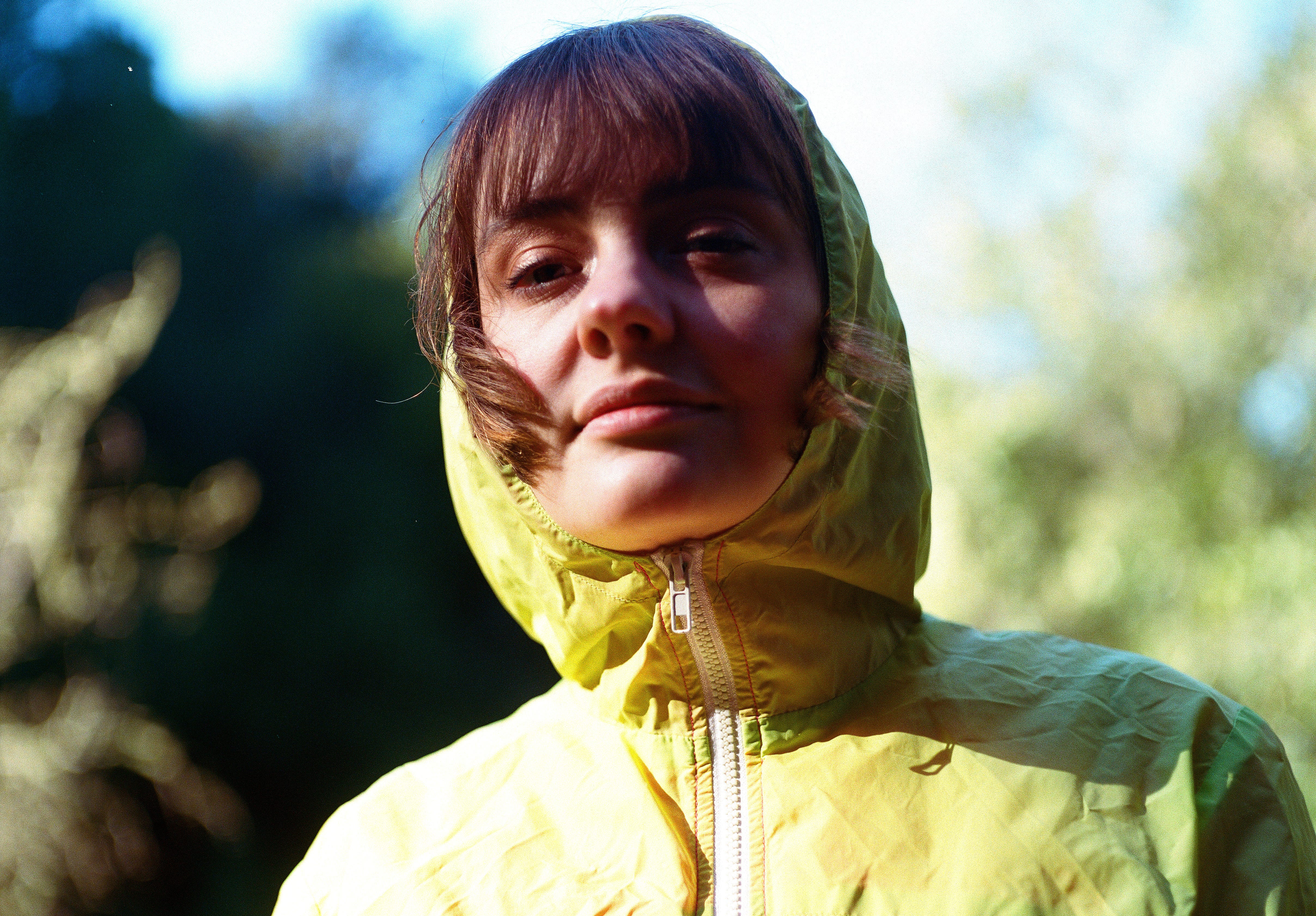
I finally interview her on a summery Friday afternoon in her backyard, sitting on a table between her ceramics studio and her recording studio–two realms of her broad mastery, both indicative of her commitment to creative practice. She rattles off a list of her other pursuits–she baked professionally, she makes jewelry, she does large scale oil paintings, she knits, she sews, she quilts. “I really need to keep my hands busy to stay sane,” she says, “To go a day without exercising some kind of creativity feels very empty to me.” She accepts that she won’t always be inspired musically, but that she can gain wider insight from the many different angles of approach, the many forms of energy expended.
In fact, these other experiences inform the life that she writes about. “I’ve been accused of not being focused, but why? Who makes the rules? Learning new things makes me a person,” she counters. We talk about that Laurie Anderson clip in which she points out that she evades such critique by calling herself a multimedia artist, the fine arts euphemism to end them all. But Madeline is familiar with the diehard culture that surrounds music; all artistic professions, including baking, exist in a similar ecosystem of obsessive competition and cutthroat self-regard. The world seems to necessitate the urge to specialize rather than explore, but Madeline pushes back by synthesizing everything she comes into contact with directly into her music.
She made a media guide for her second single “I Drew a Line” that included everything from a Paul and Linda McCartney single to Frog and Toad to the BBC program “Ways of Seeing” that she samples in the song. “Some people are really good at creating an insular world, but it’s more satisfying to me when I can pull from whatever thing I’m enthralled with and make that a part of the music,” she explains, “I hope it makes the songs more resonant for listeners, even if it’s subconscious.” This attitude towards her work as a consumer of art, not just a producer, blurs the capitalist distinction between the two. Her work insists on being contextualized and sharing space with the world she inhabits. “Nothing new under the sun,” she quips.
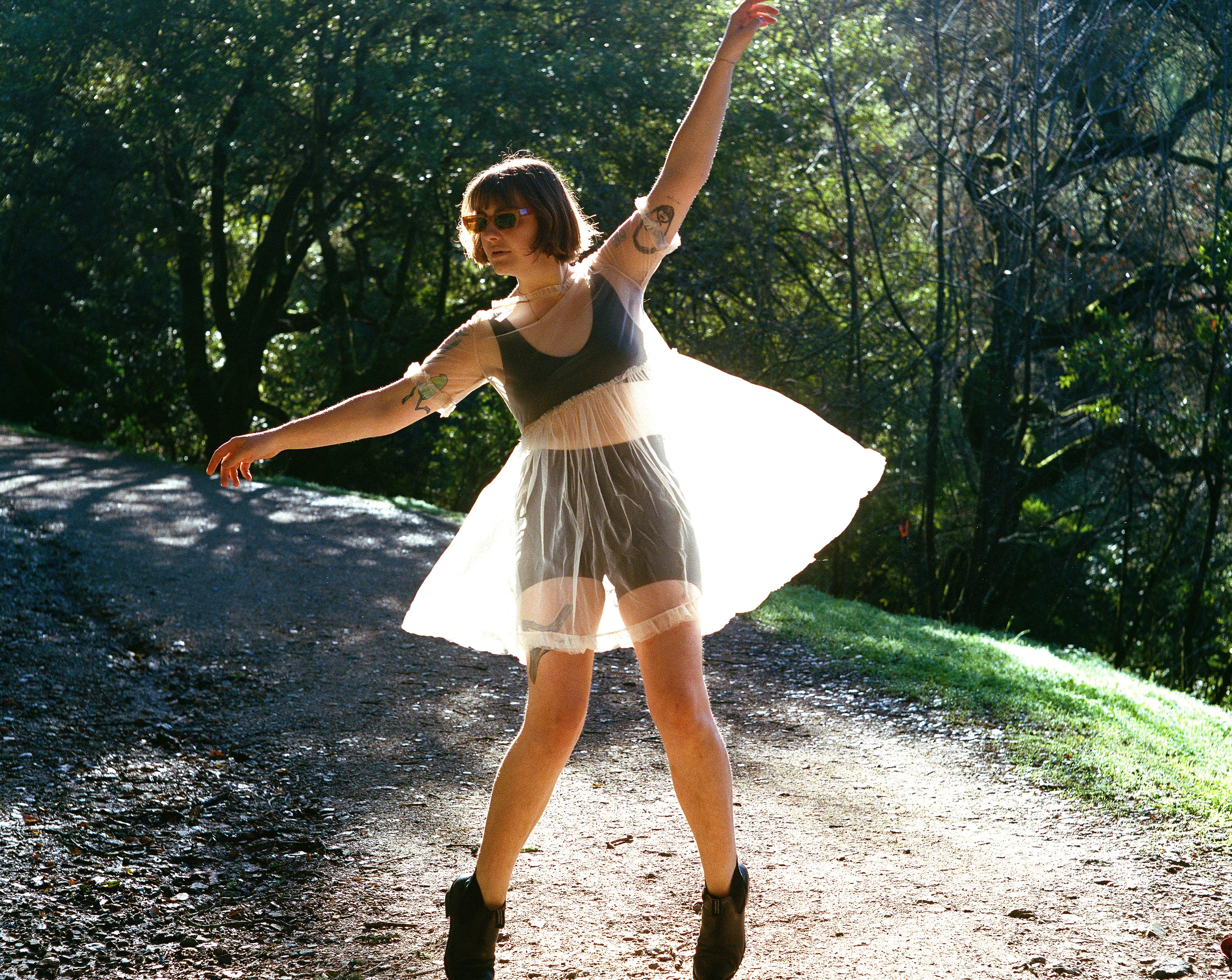
Though she’s in constant conversation with the art that inspires her, Madeline prefers to work alone. She brings up friend-of-the-newsletter Ben Sloan as an example of someone she asked to contribute to A New Reality Mind, a process that involved carving out a space for him and communicating her vision while still trusting his musicality. “I had all these drum parts written, but Ben was able to translate them into something much more dynamic and interesting,” she says, “I know what I want to hear, but I can’t do it myself.” With such singular insight, she worries that what she is creating makes sense only to her, alone in her basement. I posit that it’s almost more remarkable that she can communicate her personal experience in a way that is so profoundly universal in professional and personal isolation. She sings on “HFAM,” “Songs don’t teach you anything / Imagining my life / You, planting another dream / What will it look like?” The emotion captured here encompasses disillusion, disappointment, resignation, and morbid curiosity, all at once. I’ve felt that, I tell her.
Working in her basement studio that she built with her former partner, Madeline actively reframed the space to mean something new to her. The record is fundamentally about healing, although it acknowledges the grief that must come first. I ask her if her return to the piano, the instrument she first learned to play, was a conscious choice after two records written primarily on the guitar. “I think it was conscious in that I was purposefully seeking comfort,” she muses, “During a time when I was having a fear of writing, using the keys meant that I could kind of let the music auto-generate underneath my fingers.” A New Reality Mind feels innate, intuitive, as if the songs came out fully formed—and because Madeline wrote and produced it alone, in a way, they mostly did.
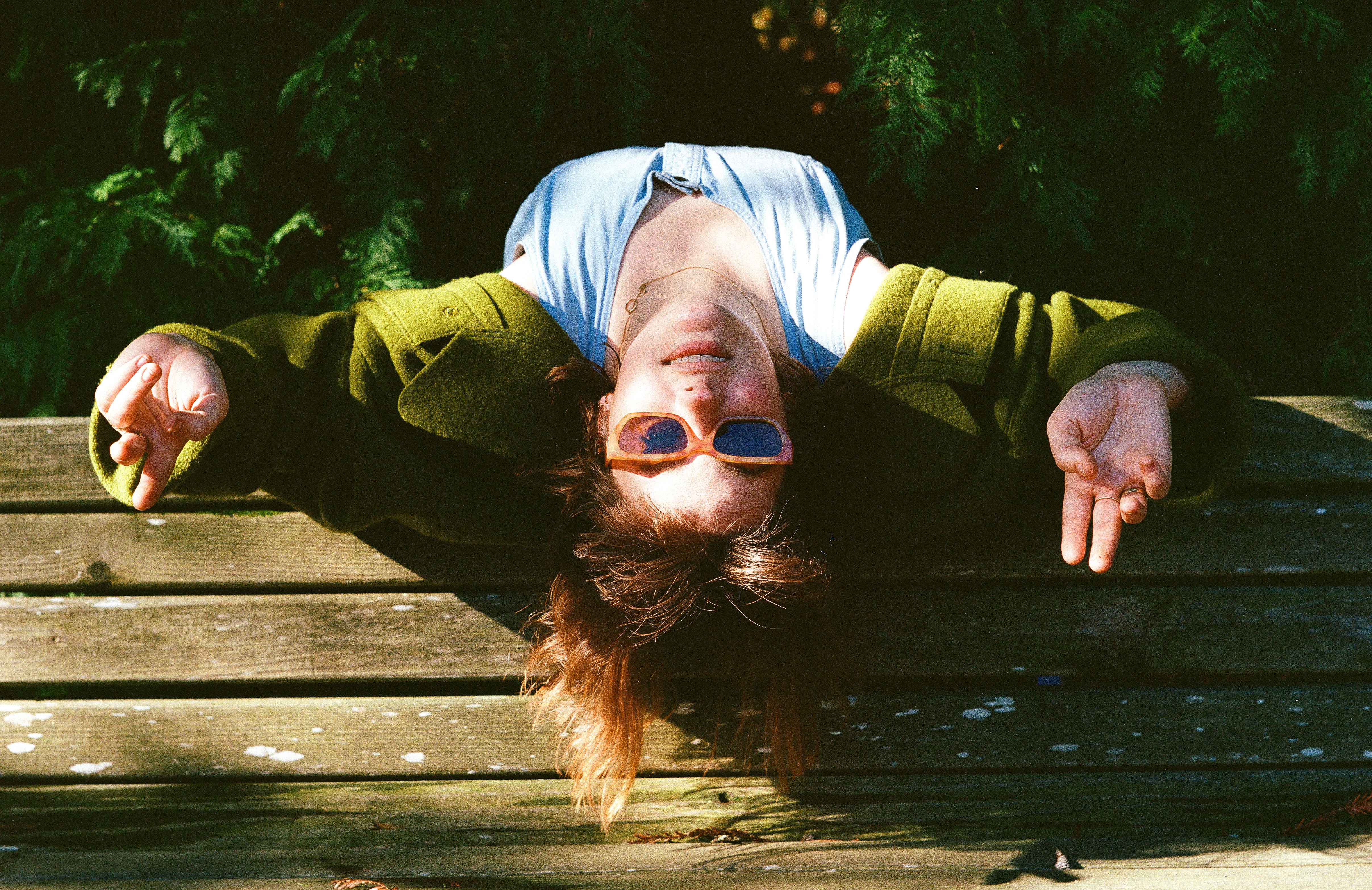
I was in Madeline’s band when she first started playing the songs that would become A New Reality Mind live. She laughed it off at the time, but her music is nothing if not piercingly personal, like she is subjecting herself to scrutiny by her own giant eye behind the microscope. She’s getting ready to tour the record, to sing these songs every night. “Your personal life becomes consumable,” she says, “But the specifics of the story don’t really matter, because everyone goes through heartbreak—I just provide some kind of mirror.
“And playing those songs over and over… they become something different. It’s not like digging the knife in every time. It’s like showing the scar,” she explains. Even now, the separation is beginning to reveal itself; she tells me which songs she’s excited to sing on tour and which ones were the most fun to write, even if they were painful to imagine. “There are a million breakup albums for a reason,” she laughs, “Listeners and artists both want to feel like they’re not alone, and not unloveable.”
I just caught up with this - amazing that you played with her. A New Reality Mind is a fantastic album!